
How the Railway Saved British Columbia — And Shaped Life in the Columbia Valley
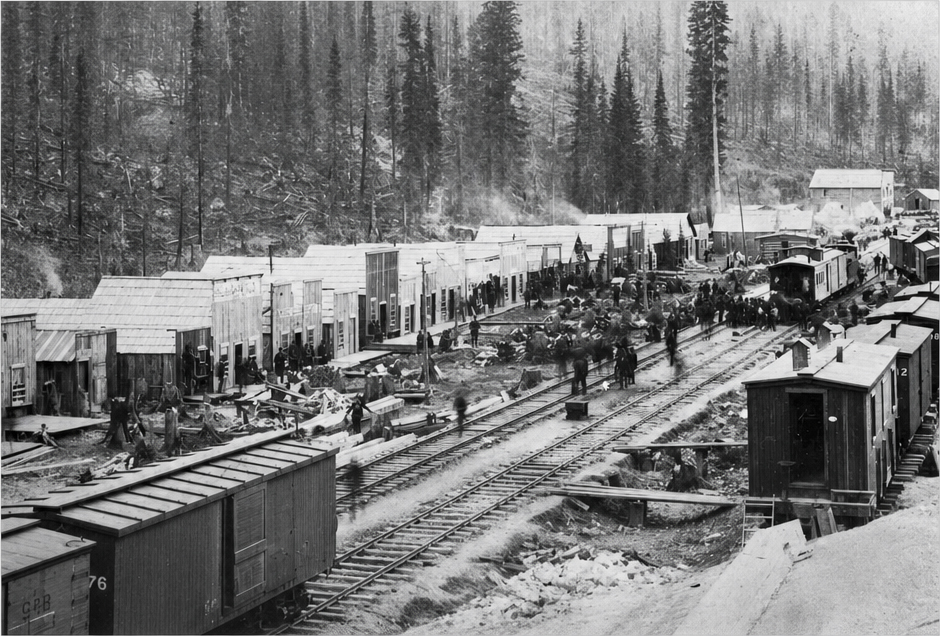
In the late 1800s, British Columbia was in a much tighter spot than most people realize today. The province we live in now — with our mountain towns, railway history, and Canadian identity — came surprisingly close to ending up as part of the United States. It wasn’t a war or a big political takeover that almost did it, but simple isolation. Cut off from the rest of Canada by the Rockies, BC was drifting, and the economic pull from down south was getting stronger by the year.
When BC agreed to join Confederation in 1871, it hinged on one huge promise: that Canada would build a transcontinental railway to connect the Pacific coast to the rest of the country. Without that line, trade naturally flowed south instead of east, and plenty of people here were quietly wondering if joining the U.S. might just make life easier.
The stakes were massive. If that track hadn’t been laid, the Columbia Valley likely would have grown up under an American flag. Golden would be a small U.S. mountain town running on American laws and industry. Our early logging and mining setups would have answered to markets down south, and national parks like Yoho and Glacier might have ended up under the U.S. park system — or never created at all.
What saved it was the sheer grit it took to complete the Canadian Pacific Railway.
Building through the Rockies was brutal. Rogers Pass only exists because Major A.B. Rogers managed to locate a way through the Selkirks, which most thought was impossible. Up in the pass, work camps fought through forty-foot snowfalls, avalanches, and steep, punishing terrain. But every mile of track laid was a hard-fought claim that BC belonged to Canada.
When the line finally opened in 1886, everything shifted overnight. Goods, news, and people could actually move across the country. That connection anchored BC to Canada and kept us from being swallowed up by the U.S.
For us in the Columbia Valley, the railway set the foundation for everything. It brought in the settlers and local industries that eventually gave rise to the Golden Era and later the Golden Star. Looking at those old photos of the early rail camps — the rough timber shacks, steam in the cold air, and the crews standing beside the rails — you’re really looking at the exact moment our valley’s modern history kicked off.