
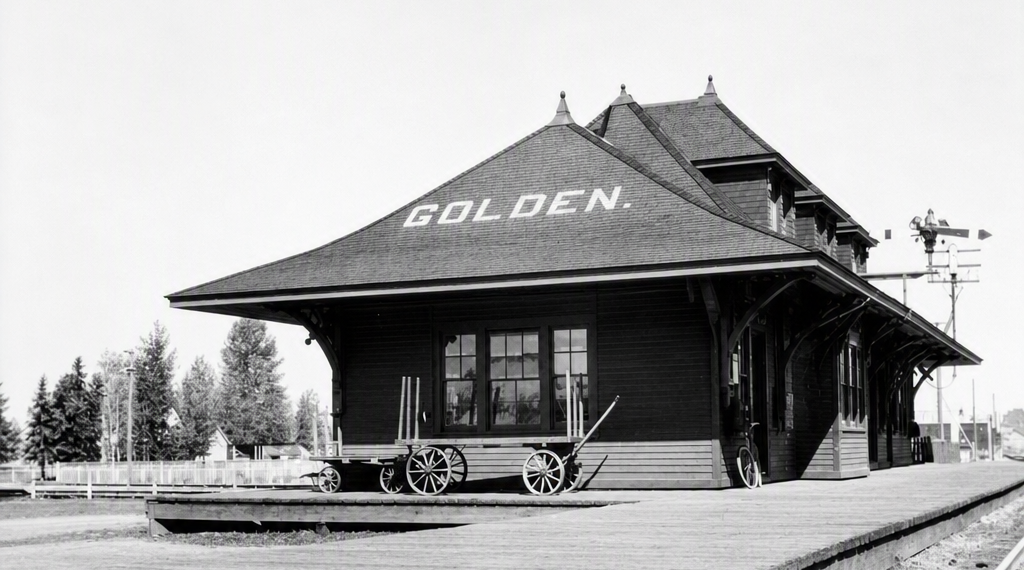
The CPR Station in Golden, BC — A Brief History
The Golden CPR Station, built in 1904, was once the beating heart of transportation in the Columbia Valley. For decades, it served as the community’s link to the rest of Canada, bringing in supplies, passengers, mail, and even livestock — a lifeline for a growing mountain town.
During its early years, the station was central to daily life in Golden. Trains delivered goods for local businesses, brought families together, and connected residents to distant places. The station master and railway workers were well‑known figures, and the station itself was a symbol of Golden’s importance along the CPR line.
Passenger services at the Golden station were discontinued in 1986, marking the end of an era. The CPR stripped the building of equipment and leased it to VIA Rail, which used it for seating and washrooms. In 1988, VIA Rail constructed a smaller ticket house — the one now used by the Kicking Horse Chamber of Commerce — and the original station needed to be moved.
Facing demolition, the station was saved thanks to strong community advocacy. The Town of Golden approved $30,000 to preserve the building, and a team prepared it for relocation. In April 1988, the station was moved across the river, where it sat near Kumsheen Park.
In 1992, the Town sold the station to the Golden & District Historical Society for $1, along with a parcel of land. Later that year, it was moved again — this time to its current location near the museum.
Over the past three decades, the station has been the subject of many discussions about its future. While large‑scale restoration has been challenging, the Historical Society has ensured the building remains stable and cared for. In the last ten years, it has received:
- A new roof
- An accessibility ramp
- New doors and windows
- Recognition as a priority in the museum’s strategic plan
The station stands today as a tangible reminder of Golden’s railway heritage — a structure that has literally crossed the river to survive, and continues to inspire conversations about preservation, community identity, and the town’s connection to the CPR.