
The Selkirk: Leisure and Connection on the Upper Columbia River
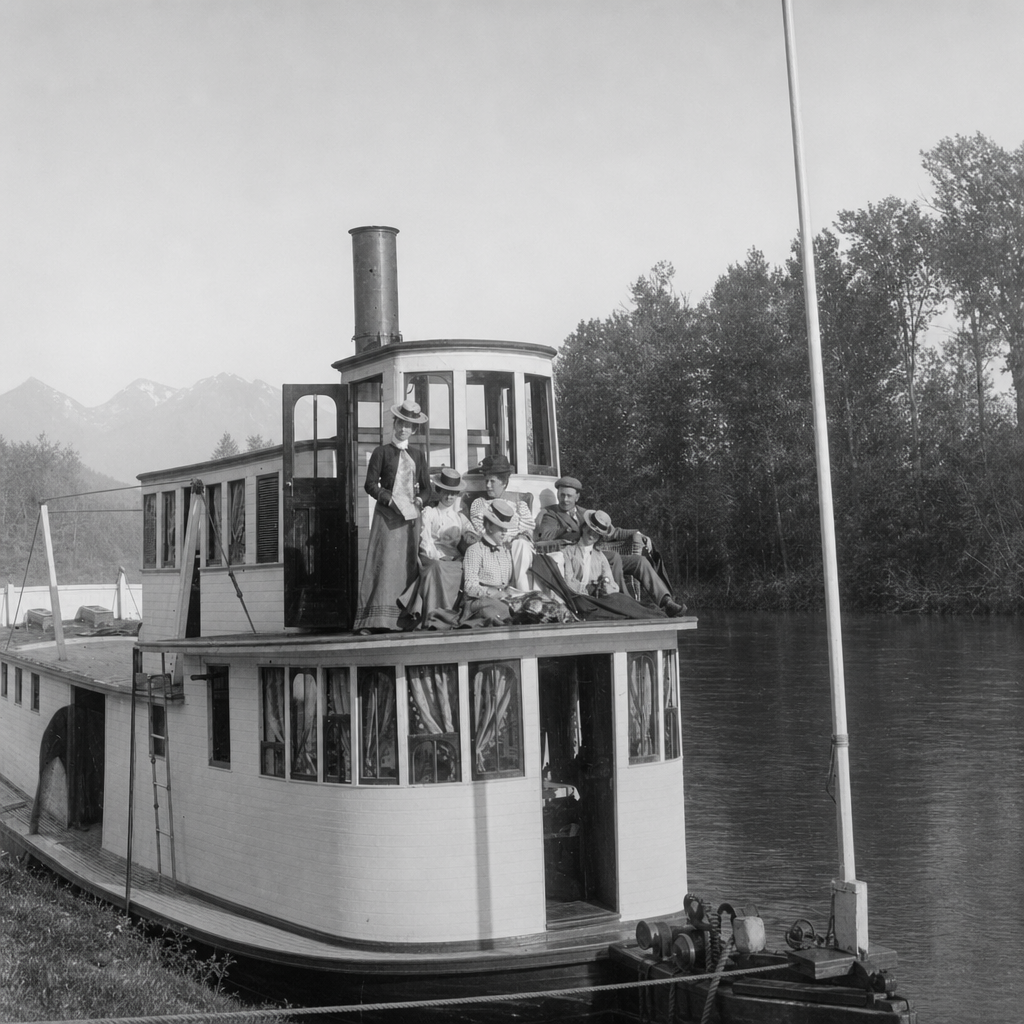
In the early years of the twentieth century, the Columbia River was more than a waterway — it was a lifeline. Before highways carved their way through the mountains, the river carried people, goods, and stories between the small communities that dotted its banks. Among the vessels that served this route, the Selkirk stood out not for its cargo, but for its comfort.
Unlike the freight sternwheelers that hauled supplies to mining camps and logging sites, the Selkirk was designed for passengers. Its tasselled window covers, broad viewing decks, and graceful lines spoke of a gentler purpose: travel as experience rather than necessity. Passengers could sit beneath the awnings, watching the forested slopes slide by, the paddlewheel’s steady rhythm marking time in a world that moved more slowly.
Photographs of the Selkirk capture this spirit of leisure. Families and travellers pose on the upper deck, dressed in their finest — long skirts, tailored jackets, and hats tilted just so. The river’s surface gleams behind them, reflecting the mountains that framed their journey. It was a moment of calm in an era of change, when the region’s industries were expanding and the pace of life was beginning to quicken.
For residents of the Upper Columbia Valley, boats like the Selkirk were more than transportation. They were social spaces — floating parlours where news was exchanged, friendships formed, and the landscape admired from a new perspective. The journey itself became a shared experience, connecting communities along the river’s course.
A Brief History of the Selkirk
The Selkirk operated on the Upper Columbia River from 1899 to 1917, serving communities between Golden and Windermere. Built by the Columbia River Lumber Company, it was one of the few vessels dedicated primarily to passenger service. During its years of operation, the Selkirk became a familiar sight on the water — carrying tourists, settlers, and local residents through the valley’s winding channels. As rail travel expanded and roads improved, the era of riverboats gradually faded, but the Selkirk remained fondly remembered for its elegance and ease.
Enduring Legacy
Today, the Selkirk exists only in photographs and memories, but its legacy endures. It reminds us that travel once unfolded at the speed of conversation and scenery — that the Columbia was not just a route, but a rhythm. Restoring this image allows us to glimpse that rhythm again, to feel the quiet grace of a vessel built for people, not for haste.