
Walter Moberly
From Survey Stakes to Ski Tracks: Honouring Walter Moberly
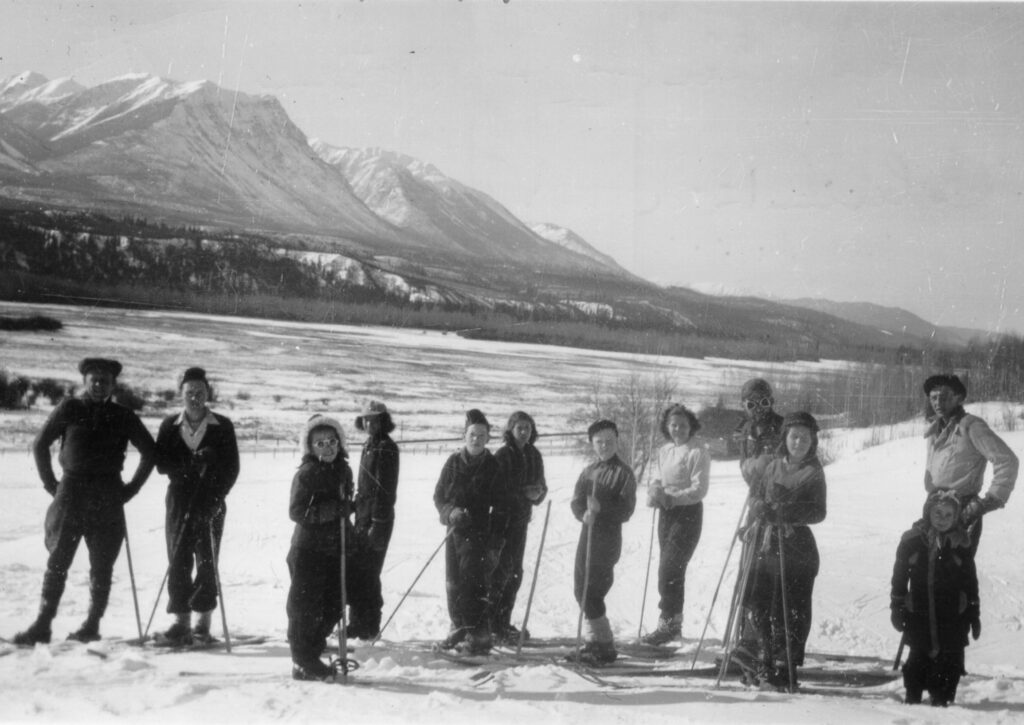
As we near the end of our massive photo archiving project at the Golden Museum — nearly 10,000 images scanned and preserved — one particular photo stands out: a group of skiers lined up on the early ski hill at Moberly, BC, taken in the 1940s. It’s a joyful snapshot of community and winter fun, but it also evokes the name behind the mountain: Walter Moberly.
Moberly Peak is more than a landmark — it’s a tribute to a man whose grit and vision helped shape British Columbia’s early infrastructure. Born in Oxfordshire, England in 1832 to a British naval captain and a Polish noblewoman, Walter Moberly came to Canada as a child and was educated in Barrie, Ontario. Fascinated by railroads and the vast Canadian landscape, he apprenticed as an engineer and began surveying for the Grand Trunk Railway.
Inspired by the artist Paul Kane’s depictions of the Rockies and Columbia River, Moberly set out west during the gold rush, arriving in Victoria in 1858 after a long steamboat journey around Cape Horn. After a brief stint in the Lillooet goldfields, he returned to Victoria broke but determined — and soon found work as a civil engineer with the Royal Engineers under Colonel Moody.
His contributions were immense: he helped survey the sites for Vancouver and New Westminster, built the Dewdney Trail (now the Hope-Princeton Highway), and constructed a wagon road to the Cariboo. Most notably, he challenged the belief that the Selkirks and Gold Range were impassable, advocating for a railway route through the Southern Interior — a vision that would eventually help shape the path of the Canadian Pacific Railway.
Walter Moberly’s legacy lives on in the peaks and passes he once explored, and in the communities that grew from his determination. As we look at the smiling faces of the Moberly Ski Club in that 1940s photo, we’re reminded that history isn’t just in the archives — it’s in the land, the names, and the stories we continue to tell.